Connected
workforce layer
Unifies faculty, staff, payroll, and workforce coordination signals in one view.
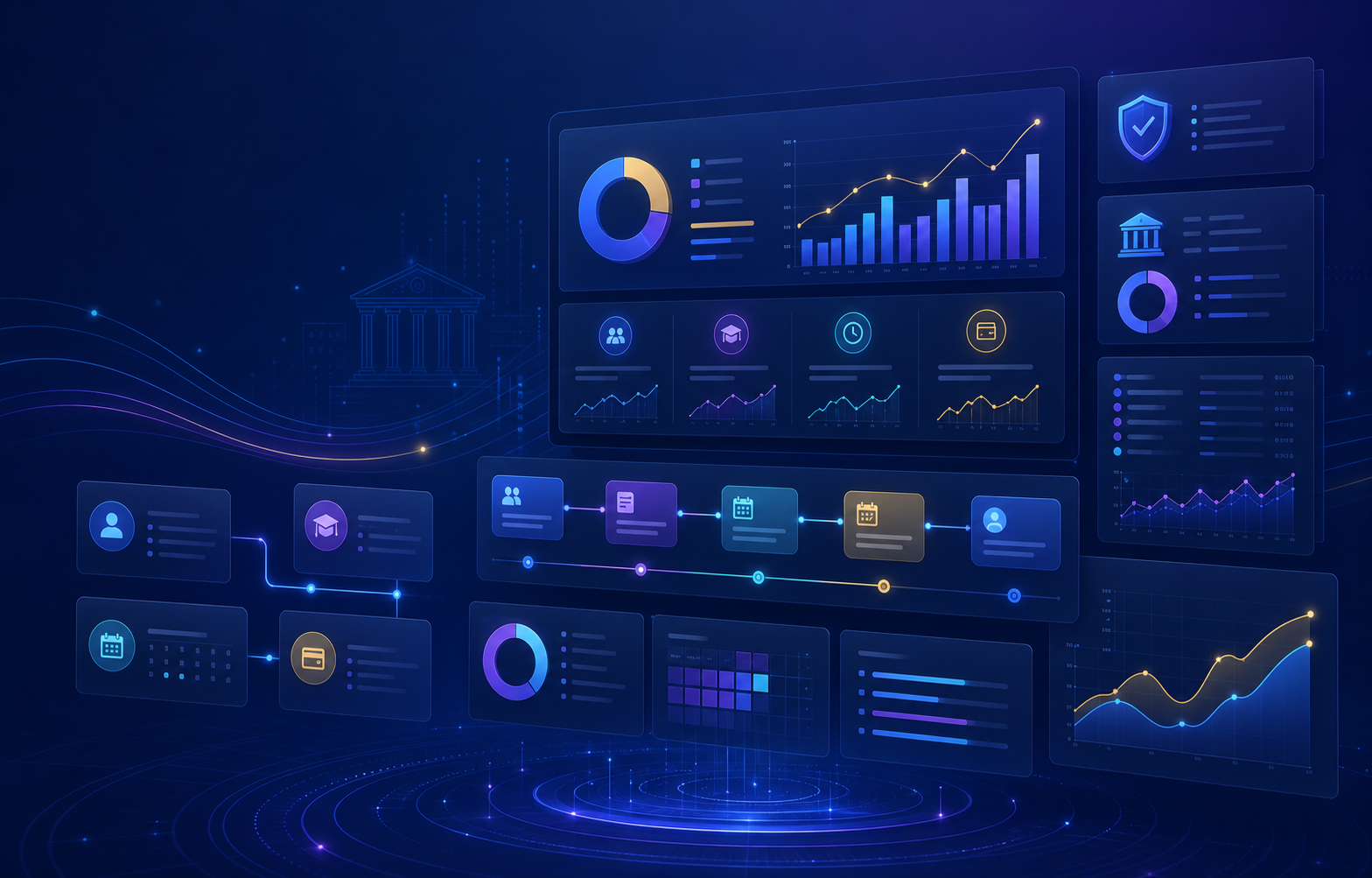
EDUCLO connects workforce operations, payroll coordination, faculty engagement, and governance visibility into one institutional intelligence layer.
Most institutions still manage employee data, payroll, attendance, and reporting across disconnected tools. That keeps teams busy, but it does not create workforce intelligence.
Employee records, scheduling, payroll, and reporting often live in disconnected tools.
Teams still rely on email, spreadsheets, and follow-up chains for routine workforce tasks.
Many institutions see this category as back-office administration instead of strategic infrastructure.
Leadership cannot easily see attendance, compensation, and workforce signals together.
Fragmented data reduces speed, clarity, and confidence in day-to-day operations.
A payroll system can process transactions. EDUCLO is designed to help leadership understand the workforce, the governance context, and the operational story together.
The platform turns fragmented workforce activity into connected operational visibility, governance alignment, and AI-driven insight.
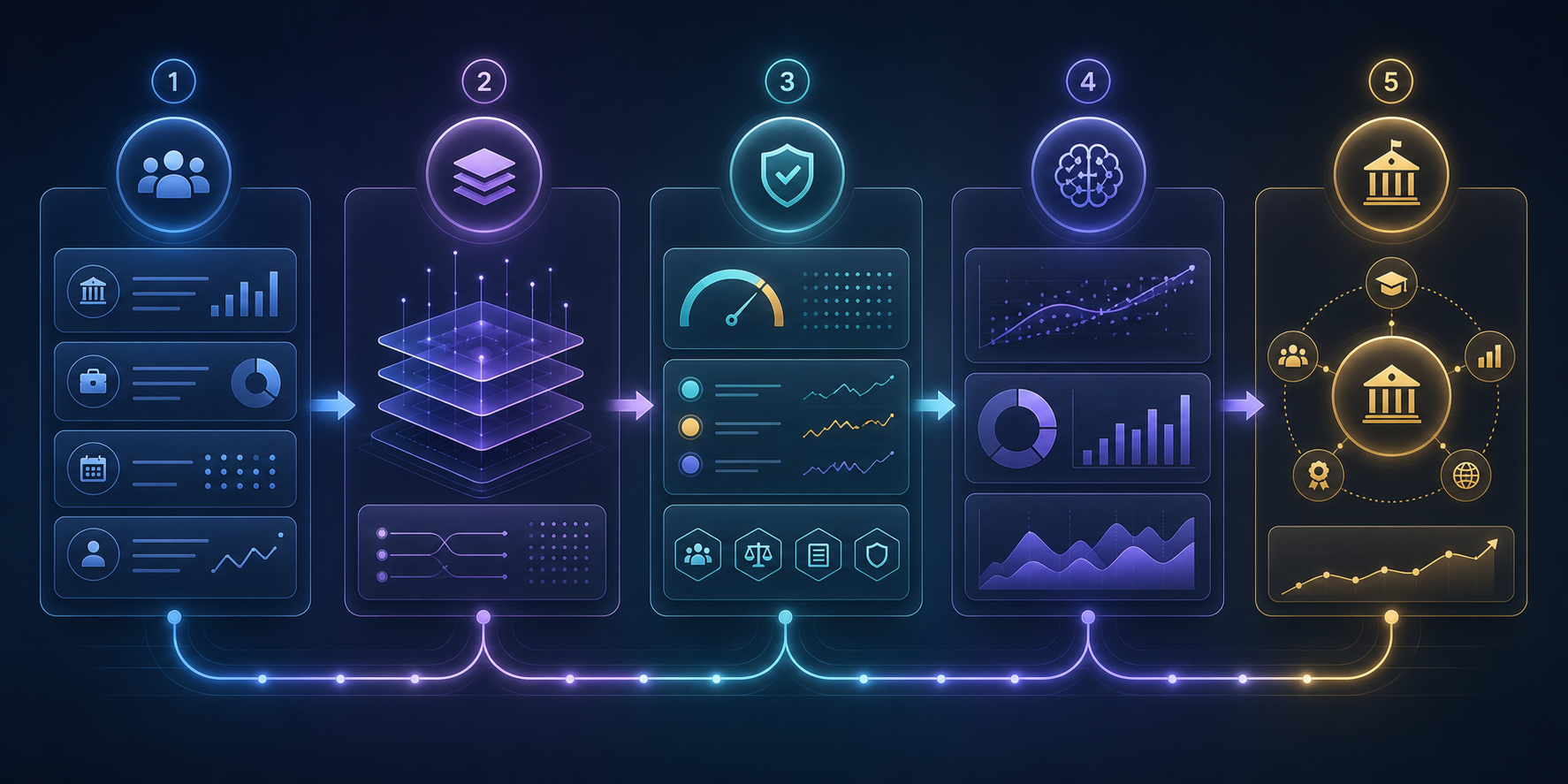
Capture workforce activity, records, and coordination across the institution.
Normalize the data and connect it with institutional meaning and context.
Expose approvals, accountability, exceptions, and workforce status in one place.
Surface trends, patterns, and planning insights that support proactive management.
Move from fragmented administration to a coordinated workforce operating model.
These capabilities help the page feel like a strategic workforce platform rather than an administrative HR or payroll module.
Centralize employee, faculty, and operational workforce coordination.
Enable predictive analytics, engagement insights, and workforce visibility.
Manage compensation workflows, pay structures, and operational transparency.
Track participation, schedules, and institutional activity without losing context.
Support policy enforcement, audit readiness, and institutional accountability.
Scale visibility across campuses and ecosystem deployments with confidence.
The page should speak to the buyers and stakeholders who care about workforce visibility, governance, and operational coordination at scale.
Modernize faculty operations and improve workforce visibility across the institution.
Enable accountability, operational monitoring, and workforce oversight.
Support enterprise learning, internal academies, and workforce coordination.
Manage distributed teams, programmes, and community education initiatives.
Spot changes in staffing, scheduling, and activity patterns early.
Understand participation and engagement signals in a more connected way.
Identify friction points and process delays that slow the institution down.
Anticipate demand, capacity shifts, and resourcing needs before they escalate.
Use workforce data to better allocate time, effort, and operational attention.
Unlike standalone HRMS tools, EDUCLO can be framed as a connected infrastructure layer for workforce operations, governance workflows, academic systems, analytics, and operational intelligence.
Bring staffing, attendance, and compensation into one coordinated layer.
Embed approvals, policy checks, and accountability into daily operations.
Connect workforce operations to institutional and academic activity.
Give leadership a shared view instead of separate departmental snapshots.
Add AI-powered context that helps teams act faster and with more confidence.
The experience should communicate coordination, visibility, resource alignment, collaboration, and improved institutional performance.
Keep people, responsibilities, and workflows connected across the institution.
Make attendance, payroll, and coordination signals easier to understand.
Support teams with better workload, timing, and capacity alignment.
Help institutions coordinate across campuses, partners, and distributed teams.
Turn disconnected processes into a clearer operational rhythm for leadership.
Position EDUCLO as relevant to public-sector modernisation and oversight.
Show traction with institutions looking for stronger workforce visibility.
Demonstrate that the platform can support practical adoption and experimentation.
Extend relevance to mission-driven, distributed, and community-based programmes.
Use ecosystem validation to reinforce trust and strategic maturity.
Explore how EDUCLO enables AI-powered workforce intelligence, connected governance, and institutional operational transformation.